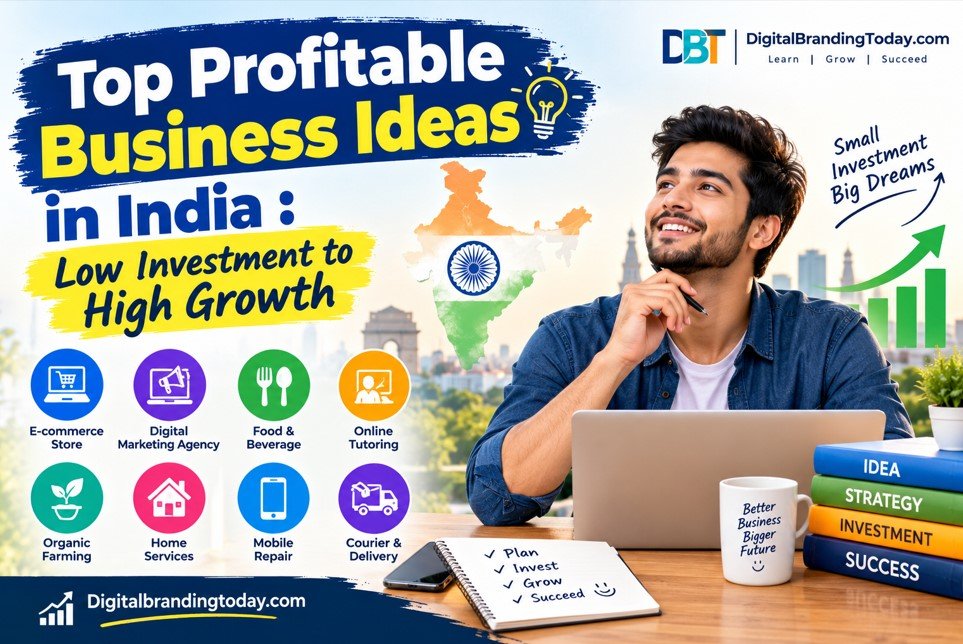
Starting a business in India has never been more accessible. With widespread internet penetration, the rapid adoption of UPI (Unified Payments Interface), and government initiatives like Startup India, the barrier to entry is at an all-time low. India is no longer just a global IT hub; it is a thriving marketplace for diverse, homegrown startups.
Whether you live in a bustling metro city like Bengaluru or a rapidly growing Tier-3 town, identifying the right opportunity is your first step toward financial independence. This guide breaks down highly actionable, scalable, and profitable business ideas tailored specifically for the Indian market. We will explore low-investment ventures, tech-driven startups, and future-proof industries to help you build a sustainable enterprise.
Business Ideas in India
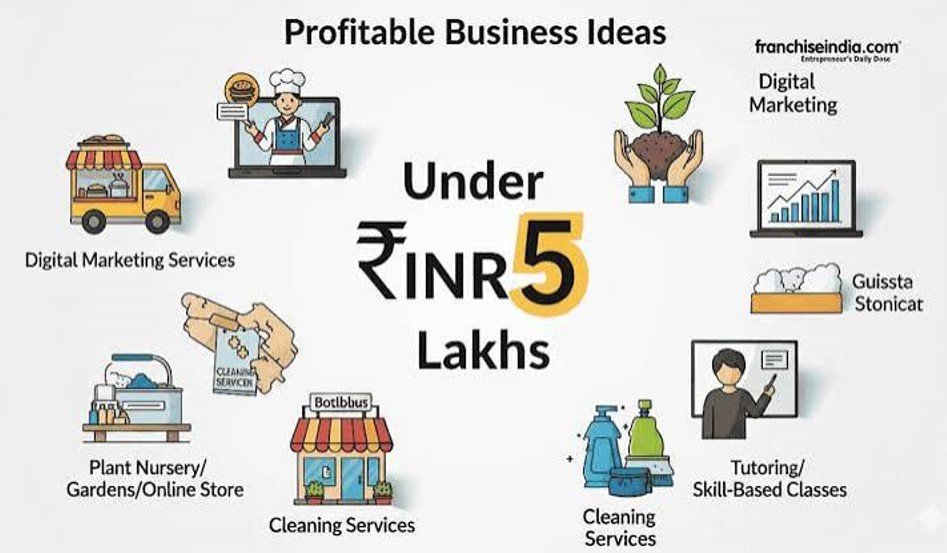
India boasts the third-largest startup ecosystem in the world. The shift in consumer behavior toward digital convenience has created a massive gap for modern entrepreneurs to fill.
Today, consumers expect instant food delivery, personalized digital learning, and eco-friendly products. Simultaneously, B2B (business-to-business) companies are desperate for specialized services like AI integration, SEO, and remote workforce management. By aligning your skills with these shifting market demands, you can build a highly profitable venture. The secret is finding a niche where demand outpaces supply, and executing it with exceptional customer service.
You do not need a massive bank loan to start a successful company. Bootstrapping—building a company from personal savings or operating revenue—is highly effective in the service and digital sectors.
- Target Market: Corporate employees, hostellers, and busy families.
- Requirements: A commercial kitchen space (can be small), cooking equipment, and an FSSAI (Food Safety and Standards Authority of India) license.
- Execution Strategy: Partner with platforms like Swiggy and Zomato. Optimize your menu around high-margin, easy-to-transport foods like biryani, momos, or healthy salads.
- Target Market: Niche hobbyists, fashion enthusiasts, or tech gadget lovers.
- Requirements: A Shopify or WooCommerce website, a reliable supplier (like IndiaMart vendors), and a marketing budget.
- Execution Strategy: Focus on a hyper-specific niche, such as traditional Indian handicrafts, affordable activewear, or custom phone cases. Drive traffic using Instagram Reels and Facebook ads.
- Target Market: Small and medium enterprises (SMEs), local doctors, real estate agents, and restaurants.
- Requirements: A laptop, reliable internet, and deep knowledge of marketing tools (Google Analytics, Meta Ads, Ahrefs).
- Execution Strategy: Pick a specific industry. Instead of being a general marketer, become the “go-to marketing agency for dental clinics in India.” This specialization allows you to charge premium rates.
If you have a background in software, operations, or technology, leveraging these skills can lead to highly scalable startups.
- Target Market: E-commerce brands, real estate firms, and customer support centers.
- Requirements: Understanding of platforms like Make, Zapier, ChatGPT API, and basic prompt engineering.
- Execution Strategy: Offer a free audit to local businesses. Show them how an AI chatbot can handle 80% of their WhatsApp customer inquiries automatically, saving them thousands of rupees in salary costs.
- Target Market: College students, working professionals looking to upskill, and global audiences.
- Requirements: High-quality webcam, microphone, screen recording software, and course hosting platforms (like Teachable or Graphy).
- Execution Strategy: Build an audience by giving away free, high-value tutorials on YouTube. Once you establish authority, sell advanced cohort-based courses or one-on-one mentorship.
- Target Market: Residents of tier-2 and tier-3 cities who want the convenience of mega-city delivery apps.
- Requirements: A fleet of delivery partners (gig workers), a mobile app, and partnerships with local Kirana (grocery) stores.
- Execution Strategy: Start in one specific zip code. Partner with local vendors so you don’t have to buy inventory. Focus on fast delivery times and localized customer support.
Indian consumers are becoming highly conscious of their environmental impact. Businesses that offer green alternatives are seeing rapid growth and strong brand loyalty.
- Target Market: Health-conscious urban consumers and premium organic supermarkets.
- Requirements: Land or a terrace setup (for hydroponics), organic seeds, and a supply chain network.
- Execution Strategy: Sell directly to consumers via WhatsApp groups in premium residential societies. A farm-to-table subscription model guarantees recurring weekly revenue.
- Target Market: EV owners, commercial fleet operators, and highway travelers.
- Requirements: Commercial space (parking lots, highway dhabas, or malls), government permits, and charging hardware.
- Execution Strategy: Partner with existing businesses that have unused parking space. Install the stations and share a percentage of the charging revenue with the property owner.
- Target Market: Gen-Z, millennials, and eco-conscious shoppers.
- Requirements: Sourcing network for scrap materials, skilled tailors or artisans, and strong branding.
- Execution Strategy: Build your brand narrative around sustainability. Consumers pay a premium for products that have a positive environmental story. Market heavily on Instagram and Pinterest.
Different businesses require different resources. Use this table to match a business idea to your current capital, risk tolerance, and long-term goals.
| Business Idea |
Initial Capital |
Time to Profit |
Risk Level |
Scalability |
| Cloud Kitchen |
₹1 Lakh – ₹3 Lakhs |
3 – 6 Months |
Medium |
High |
| Digital Marketing |
Under ₹20,000 |
1 – 2 Months |
Low |
Medium |
| Hyperlocal Delivery |
₹5 Lakhs+ |
8 – 12 Months |
High |
Very High |
| Online Tutoring |
Under ₹10,000 |
1 – 3 Months |
Low |
High |
| EV Charging Station |
₹3 Lakhs – ₹10 Lakhs |
12 – 18 Months |
Medium |
Moderate |
| Dropshipping |
₹20,000 – ₹50,000 |
2 – 4 Months |
Low |
High |
Understanding the ground reality of the Indian market will help you navigate challenges and maximize your advantages.
The Pros:
- Massive Consumer Base: With over 1.4 billion people, even a hyper-niche product has a large potential audience.
- Digital Infrastructure: India offers some of the cheapest mobile data in the world, alongside the flawless, zero-fee UPI payment network.
- Government Support: Initiatives like the MSME (Micro, Small, and Medium Enterprises) act provide collateral-free loans, tax subsidies, and easier compliance.
- Global Export Hub: India is rapidly becoming an export powerhouse for software, textiles, and manufacturing, allowing you to easily sell globally.
The Cons:
- High Price Sensitivity: Indian consumers are highly value-driven. Selling premium-priced products requires exceptional branding and trust.
- Bureaucracy: While improving, acquiring certain licenses (like FSSAI or local municipal trade licenses) can still be time-consuming.
- Fierce Competition: The low barrier to entry means you will face intense competition. You must differentiate on quality, speed, or customer service.
Don’t let analysis paralysis stop you. Follow these structured steps to turn your business idea into a legal, operational entity in India.
- Conduct Market Research: Validate your idea before spending money. Talk to 50 potential customers. Ask them if they would actually pay for your solution.
- Create a Minimum Viable Product (MVP): Do not build the perfect product on day one. Create a basic version to test the market. If you want to start a bakery, sell to your neighbors first before renting a shop.
- Register Your Business: Depending on your scale, register as a Sole Proprietorship, LLP (Limited Liability Partnership), or Private Limited Company.
- Get an MSME Udyam Registration: This free government registration provides benefits like lower trademark fees, protection against delayed payments, and easier bank loans.
- Apply for a GST Number: If your annual turnover exceeds ₹40 Lakhs for goods (or ₹20 Lakhs for services), you must register for Goods and Services Tax (GST). It is also required immediately if you plan to sell on e-commerce platforms like Amazon or Flipkart.
- Set Up Banking and UPI: Open a current bank account in the name of your business. Set up a merchant UPI QR code and integrate a payment gateway (like Razorpay or Cashfree) into your website.
- Launch and Iterate: Start selling. Collect rigorous feedback from your first 100 customers and improve your offering based on their complaints and praises.
Frequently Asked Questions (FAQs)
1. What is the most profitable business in India with low investment?
Service-based businesses like Digital Marketing Agencies, Freelance Copywriting, and Online Tutoring offer the highest profit margins (often 70-90%) because they require zero inventory and minimal overhead costs. You are essentially monetizing your time and skills.
2. Do I need GST registration to start an online business?
If you are selling physical goods on e-commerce platforms like Amazon or Flipkart, a GST number is mandatory from day one, regardless of your turnover. However, if you are selling services independently or physical goods locally, you only need GST once you cross the turnover threshold (₹20 Lakhs for services, ₹40 Lakhs for goods).
3. Which business is best for tier-2 and tier-3 cities in India?
Hyperlocal delivery, localized cloud kitchens, affordable EdTech centers, and organic farming supply are incredibly successful in smaller towns. These markets are often ignored by massive startups, leaving room for local entrepreneurs to dominate.
4. How can I get funding for my startup in India?
Start with bootstrapping. Once you have revenue, you can apply for government schemes like the Mudra Loan or the Startup India Seed Fund. For high-growth tech startups, you can pitch to Angel Investors or venture capital firms after building a working prototype.
5. Can college students start a business legally?
Yes. College students can start a business as a sole proprietorship using their PAN card and a savings/current account. Many successful Indian startups began in college dorm rooms. Focus on businesses that don’t require physical presence during college hours, like dropshipping or freelance web design.
6. Is dropshipping still profitable in India?
Yes, but the model has evolved. Generic products shipped slowly from China no longer work. You must focus on high-quality Indian suppliers (using platforms like Roposo Clout or IndiaMart), fast shipping times, and building a recognizable brand name.
7. What is an MSME Udyam registration, and do I need it?
It is a government registration for micro, small, and medium businesses. While not legally mandatory to start, it is highly recommended. It is completely free and provides massive benefits, including overdraft interest rate reductions and faster resolution if a client delays your payment.
8. Which businesses have the highest failure rates?
Restaurants, retail clothing stores, and un-researched tech apps have incredibly high failure rates. They often fail due to high fixed costs (rent, salaries) combined with a lack of market demand and poor cash flow management.
9. How important is a website for a local Indian business?
Crucial. Even if you run a local hardware store, a basic website or an optimized Google My Business profile ensures that when someone searches “hardware store near me,” you appear first. Trust in India is heavily tied to digital presence.
10. What is the best future-proof business to start today?
Anything involving Artificial Intelligence, Renewable Energy (Solar/EV), or Senior Care. As technology advances and the demographic shifts, these three sectors are guaranteed to see exponential demand over the next two decades.
Conclusion
The Indian market is dynamic, aggressive, and full of limitless potential. The most successful business ideas are not always the most complex ones; they are simply the ones that solve a genuine problem efficiently.
Whether you decide to launch a localized cloud kitchen, build an AI automation agency, or start an eco-friendly fashion brand, success comes down to execution. Avoid waiting for the “perfect time” or the “perfect amount of money.” Start small, validate your idea, leverage India’s incredible digital infrastructure, and focus entirely on delivering exceptional value to your customers. The best time to build your empire was yesterday; the second best time is today.