
Business leaders face tough choices every single day. Should a company launch a new product? How much should they charge for it? Should they hire more staff or invest in automation? Making these decisions based on gut feelings is a recipe for disaster. This is exactly where managerial economics steps in.
If you want to understand how top executives make calculated, profitable decisions, you need to understand the bridge between business practice and economic theory.
This comprehensive guide will explain what managerial economics is, how it works, and why it is the backbone of modern business strategy, especially in a fast-growing economy like India.
What is Managerial Economics?

Managerial economics is the application of economic theories, tools, and methodologies to solve practical business problems. It serves as a bridge between abstract economic theory and real-world business management.
- In simple terms, it is the study of how to direct scarce resources in a way that most efficiently achieves a managerial goal.
When a business leader uses data, mathematical formulas, and economic logic to decide on pricing, production levels, or market expansion, they are practicing managerial economics. It removes the guesswork from corporate planning and replaces it with logic, data analysis, and strategic forecasting.
The Nature of Managerial Economics
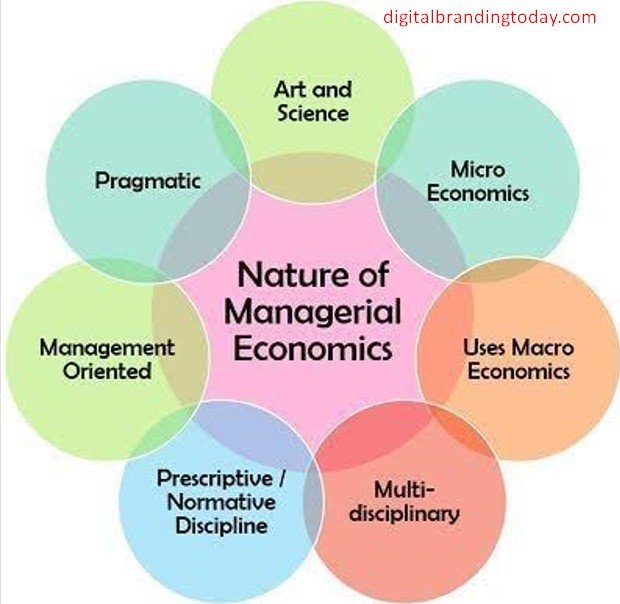
To fully grasp this subject, we must look at its core characteristics. Managerial economics is unique because it borrows from various disciplines to create a practical framework for decision-makers.
1. Microeconomic in Character
While traditional economics studies the entire economy (macroeconomics), managerial economics focuses primarily on the microeconomic level. It analyzes individual firms, specific consumer behaviors, and distinct industries rather than national inflation or global trade deficits.
2. Pragmatic and Applied
Theoretical economics often assumes a perfect world—perfect competition, rational buyers, and equal information. Managerial economics knows the real world is messy. It is highly pragmatic, focusing on practical solutions to everyday business hurdles, adjusting for market imperfections and human behavior.
3. Normative Approach
Economics is generally divided into two branches: positive (what is) and normative (what ought to be). Managerial economics is normative. It does not just describe a business problem; it prescribes a specific course of action to solve it. It tells a manager what they should do to maximize profits or minimize costs.
4. Uses Macroeconomic Context
Even though it is mostly microeconomic, a smart manager cannot ignore the broader economy. Managerial economics uses macroeconomic factors—like the Reserve Bank of India (RBI) interest rates, government taxation policies, and national employment rates—to understand the environment in which the firm operates.
The Scope of Managerial Economics

The scope of managerial economics is vast. It covers every major operational area where a business must make a choice about allocating limited resources.
Demand Analysis and Forecasting
A business cannot survive without customers. Demand analysis helps a company understand why consumers buy a product, how much they are willing to pay, and how sensitive they are to price changes (price elasticity). Demand forecasting takes this a step further by predicting future sales, allowing a company in sectors like Indian retail or FMCG to manufacture the right amount of goods without overstocking.
Cost and Production Analysis

Managers must know the true cost of producing a good or service. Cost analysis helps identify which expenses are fixed, which are variable, and where the company can cut corners without sacrificing quality. Production analysis looks at the physical process of turning raw materials into finished goods, ensuring the factory floor operates at peak efficiency.
Pricing Decisions and Policies
Pricing is often the most critical factor in a product’s success. If a product is priced too high, consumers will flock to competitors. If priced too low, the company leaves money on the table. Managerial economics provides scientific frameworks for pricing strategies, such as penetration pricing (entering a market with low prices) or price skimming (charging a premium for a new innovation).
Profit Management

In a free market, profit is the ultimate reward for taking risks. However, profits are never guaranteed due to market uncertainty. Managerial economics helps firms plan for long-term profitability by analyzing break-even points, controlling internal costs, and forecasting future market shifts.
Capital Management (Capital Budgeting)
Capital is the lifeblood of any business, but it is always limited. Capital budgeting involves planning and controlling capital expenditures. Should a tech company in Bengaluru invest in a new data center or acquire a smaller competitor? Managerial economics provides tools like Net Present Value (NPV) and Internal Rate of Return (IRR) to determine which investment will yield the highest long-term return.
Key Principles of Managerial Economics

To make sound decisions, managers rely on a set of foundational economic principles. These rules guide corporate strategy and prevent costly mistakes.
1. The Opportunity Cost Principle
Opportunity cost is the value of the next best alternative that is given up when a choice is made. Resources are scarce. If a business owner in Delhi uses their warehouse to store electronics, the opportunity cost is the rent they could have earned by leasing that warehouse to someone else. Decision-makers must always weigh the cost of what they are sacrificing.
2. The Marginal and Incremental Principle
Marginal analysis involves looking at the additional cost and additional revenue generated by producing just one more unit of a product. A decision is only profitable if the marginal revenue (the money gained from selling the extra unit) is greater than the marginal cost (the expense of making it). Incremental analysis is similar but looks at larger bulk decisions, like the total cost of opening a new factory branch.
3. The Equi-Marginal Principle
This principle states that an input (like labor or capital) should be allocated across different activities in a way that the value added by the last unit of input is exactly the same across all activities. If spending an extra ₹1,00,000 on digital marketing generates more revenue than spending it on billboard ads, the manager should shift funds to digital until the returns balance out.
4. The Time Perspective Principle
A decision that looks good in the short term might be disastrous in the long term. For example, a company might boost short-term profits by using cheaper, lower-quality materials. However, in the long run, this will destroy brand trust and lead to a massive drop in sales. Managers must balance short-term gains with long-term survival.
5. The Discounting Principle
Money today is worth more than money tomorrow due to inflation and investment potential. If a company invests ₹10 Lakhs today in a project that pays back ₹10 Lakhs in five years, they have actually lost money. The
Pricing Decisions and Policies
helps managers calculate the present value of future cash flows to see if a long-term project is genuinely profitable.
Managerial Economics vs. Traditional Economics
While both fields share the same roots, their applications are vastly different. Here is a clear breakdown:
| Feature | Managerial Economics | Traditional Economics |
| Primary Focus | Solving specific business problems. | Understanding how economies function. |
| Scope | Narrow (Microeconomic focus on the firm). | Broad (Both Micro and Macro levels). |
| Nature | Highly practical, pragmatic, and applied. | Theoretical, academic, and abstract. |
| Approach | Normative (Prescribes what a firm should do). | Positive (Describes how things are). |
| Assumptions | Accounts for real-world market imperfections. | Often assumes perfect market conditions. |
| Goal | Maximizing profit, minimizing risk for a business. | Maximizing social welfare and resource efficiency. |
The Role of a Managerial Economist

Large corporations often hire dedicated managerial economists to navigate complex markets. Their primary role is to minimize risk and uncover growth opportunities.
Key responsibilities include:
- Market Research: Gathering data on consumer trends, competitor pricing, and market demand within target regions.
- Macroeconomic Forecasting: Predicting how external factors (like an RBI repo rate hike or a new GST slab) will impact the company’s bottom line.
- Pricing Strategy Formulation: Using demand elasticity models to find the sweet spot for product pricing.
- Risk Management: Identifying financial risks associated with new investments and advising the executive board on mitigation strategies.
- Government Policy Analysis: Ensuring the company’s long-term strategy aligns with changing government regulations and environmental policies.
Pros and Cons of Managerial Economics

Like any business tool, managerial economics has distinct advantages and inherent limitations.
Pros
- Data-Driven Decisions: It replaces guesswork and intuition with hard numbers, reducing the chance of costly management errors.
- Optimal Resource Allocation: Helps businesses squeeze the maximum possible value out of limited budgets, labor, and raw materials.
- Future Preparedness: Through demand forecasting, companies can prepare for market shifts before they happen.
- Better Pricing Strategies: Prevents companies from underpricing their goods or pricing themselves out of a competitive market.
- Clear Profit Goals: Provides mathematical frameworks to map out exactly how and when a company will break even and become profitable.
Cons

- Relies on Historical Data: Economic forecasting depends heavily on past data. If a completely unprecedented event occurs (like a global pandemic), previous models become useless.
- Ignores Human Emotion: Mathematical models often assume humans behave perfectly rationally. In reality, consumer buying habits are heavily driven by emotion, branding, and social trends.
- High Implementation Cost: Small businesses may struggle to afford the advanced software, data analysts, and economists required to execute these strategies effectively.
- Internal Resistance: Management teams used to traditional “gut-feeling” leadership may resist adopting complex economic models.
To understand how this works in practice, let us look at two prominent examples from the Indian business landscape.
Example 1: Reliance Jio’s Penetration Pricing
When Reliance Jio entered the Indian telecom sector, it utilized a classic managerial economics strategy: penetration pricing. Jio offered free voice calls and incredibly cheap data. The economic goal was to capture massive market share rapidly, recognizing the high price elasticity of Indian consumers. Once they built a dominant subscriber base, they gradually adjusted prices upwards, leading to long-term profitability and a virtual duopoly in the market.
Example 2: Tata Motors and Cost Analysis
When Tata Motors developed the Nano (originally marketed as the ₹1 Lakh car), they relied heavily on rigorous cost and production analysis. The goal was to provide a safer alternative to a two-wheeler for Indian families. To hit that exact price point, managerial economists and engineers had to strip away every non-essential feature, optimize the supply chain, and re-engineer manufacturing processes to keep marginal costs incredibly low.
Frequently Asked Questions (FAQs)

1. What is the main objective of managerial economics?
The primary objective is to help business managers make rational, data-driven decisions that optimize the allocation of scarce resources and maximize the firm’s long-term profits.
2. Is managerial economics micro or macro in nature?
It is primarily microeconomic because it deals with the problems of an individual firm. However, it requires an understanding of macroeconomic factors (like inflation and taxes) to make accurate forecasts.
3. Who uses managerial economics?
It is used by CEOs, product managers, financial analysts, operations directors, and business owners to guide corporate strategy, pricing, and resource allocation.
4. How does managerial economics help in pricing?
It uses concepts like price elasticity of demand to show how consumers will react to a price change. This helps businesses set prices that maximize total revenue without driving customers away.
5. What mathematical tools are used in this field?
Common tools include statistical forecasting, calculus (for marginal analysis), linear programming (for resource allocation), and capital budgeting formulas (like Net Present Value).
6. What is the difference between managerial economics and business economics?
The terms are highly similar and often used interchangeably. Both focus on applying economic principles to business management to improve decision-making.
7. Why is demand forecasting crucial for a business?
Demand forecasting prevents a company from producing too much inventory (tying up cash and risking spoilage) or too little inventory (missing out on sales and losing customers to competitors).
8. How can Indian startups benefit from managerial economics?
Indian startups often operate with very limited capital. Managerial economics helps founders understand their cash burn rate, set optimal prices for early adopters, and determine when a new marketing channel is actually profitable.
9. What is capital budgeting in managerial economics?
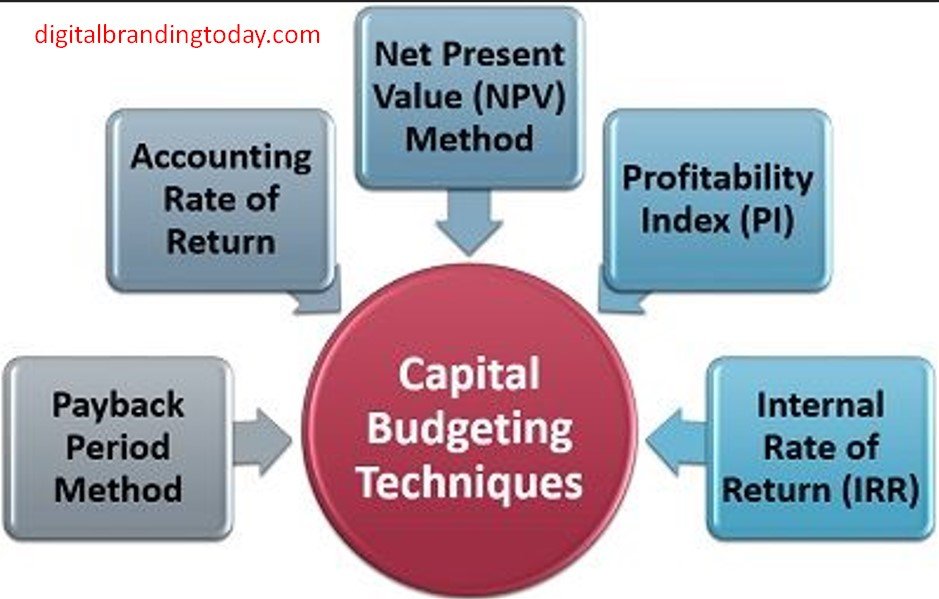
Capital budgeting is the process of analyzing large, long-term investments—such as buying new machinery or opening a new branch—to ensure the projected future returns justify the massive initial cost.
10. Can small businesses and local shops use these principles?
Yes! While a local bakery might not use complex software, they still use managerial economics when they calculate if staying open an extra hour (marginal cost) will bring in enough late-night customers (marginal revenue) to be worth it.
Conclusion
Understanding what managerial economics is changes the way you look at business. It removes the mystery behind corporate success and replaces it with logic, data, and calculated foresight.
Whether you are running a tech startup in Bengaluru or managing a massive manufacturing plant in Chennai, resources will always be limited, and competition will always be fierce. By applying the principles of managerial economics—from marginal analysis to demand forecasting—business leaders can confidently navigate market uncertainties, outsmart competitors, and secure long-term, sustainable profitability.
In today’s highly competitive business environment, economics is no longer just an academic subject; it is the ultimate tool for corporate survival.