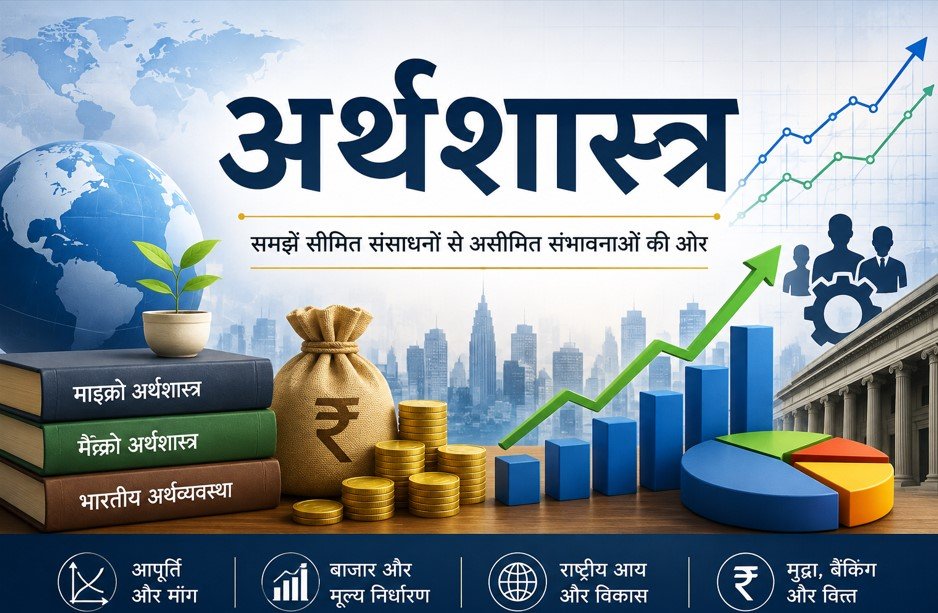
Understanding how money, resources, and societies function is the foundation of modern life. However, grasping these complex ideas is always easier in your native language. If you are a student, a professional, or simply a curious learner in India, exploring economics in Hindi bridges the gap between complex global theories and everyday practical understanding.
In Hindi, economics translates to Arthashastra (अर्थशास्त्र). The word itself carries deep historical and cultural weight, originating from ancient Indian philosophy. Today, with the rise of vernacular education and the National Education Policy (NEP) promoting regional languages, mastering economic concepts in Hindi has never been more relevant or accessible.
This comprehensive guide will break down everything you need to know. We will explore the exact Hindi terminology for global economic concepts, dive into the two major branches of the subject, trace the historical roots of Indian economic thought, and provide actionable resources to help you study effectively.
Whether you are preparing for UPSC, state PSCs, or just want to understand the daily financial news, this bilingual approach will build your foundation.
Economics is the social science that studies how individuals, businesses, governments, and nations make choices about allocating limited resources to satisfy their unlimited wants. It focuses on the production, distribution, and consumption of goods and services.
The Literal Meaning of Arthashastra
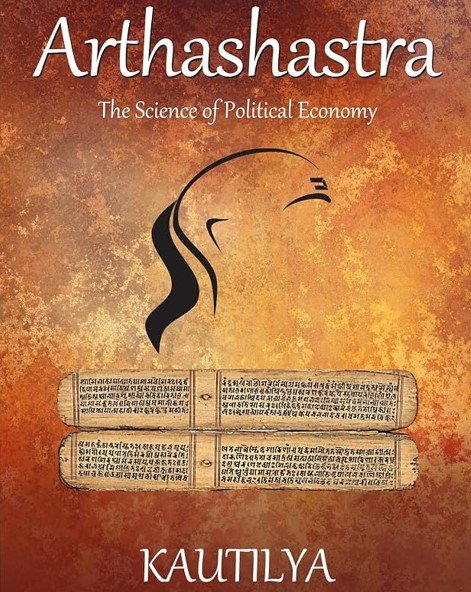
To truly understand economics in Hindi, we must look at its literal translation: Arthashastra.
The term is a combination of two Sanskrit words:
- Artha (अर्थ): Meaning wealth, purpose, property, or material well-being.
- Shastra (शास्त्र): Meaning science, scripture, or systematic study.
Therefore, Arthashastra literally translates to the Science of Wealth. It goes beyond just money; it encompasses the management of state resources, public welfare, and the strategic distribution of available assets.
Why Study Economics in Your Native Language?

Learning complex subjects in a second language often creates cognitive overload. When Indian students study economics in Hindi, the brain processes the information faster. Abstract concepts like “opportunity cost” or “marginal utility” suddenly make logical sense when translated to everyday spoken language. It allows learners to connect global financial events with local market realities seamlessly.
Just as a doctor specializes in either individual patient care or public health, economists study the world through two distinct lenses. Here is how they are classified in both English and Hindi.
1. Microeconomics (Vyashti Arthashastra – व्यष्टि अर्थशास्त्र)
Microeconomics focuses on the behavior of individual agents. This includes individual consumers, households, and specific businesses.
In Hindi, this is called Vyashti Arthashastra. The prefix Vyashti refers to the individual or the micro-level.
When you study Vyashti Arthashastra, you are looking at:
- How a single person decides what to buy based on their budget.
- How a specific shoe company decides the price of its sneakers.
- The impact of a local tax on a small business.
It is the “bottom-up” approach to understanding the economy. It zooms in on the smallest moving parts of the financial machine to see how human psychology and scarcity dictate daily choices.
2. Macroeconomics (Samashti Arthashastra – समष्टि अर्थशास्त्र)
Macroeconomics, on the other hand, steps back to view the entire picture. It deals with the performance, structure, and behavior of the entire economy—be it a region, a country, or the whole world.
In Hindi, this translates to Samashti Arthashastra. The term Samashti means the collective, the whole, or the macro-level.
Key areas of focus in Samashti Arthashastra include:
- National Income and Output.
- Unemployment rates across the country.
- General price levels (Inflation/Deflation).
- International trade and foreign exchange.
If microeconomics is studying a single tree, macroeconomics is studying the entire forest. Both are vital for a complete understanding of Arthashastra.
To read financial news or write academic papers in Hindi, you need a strong vocabulary. Below is a comprehensive comparison table of the most common economic terms translated into Hindi.
| English Economic Term | Hindi Translation (Devanagari) | Pronunciation / Roman Hindi |
| Economics | अर्थशास्त्र | Arthashastra |
| Microeconomics | व्यष्टि अर्थशास्त्र | Vyashti Arthashastra |
| Macroeconomics | समष्टि अर्थशास्त्र | Samashti Arthashastra |
| Economy | अर्थव्यवस्था | Arthavyavastha |
| Demand | माँग | Maang |
| Supply | आपूर्ति | Aapoorti |
| Inflation | मुद्रास्फीति (महंगाई) | Mudrasfiti (Mahangai) |
| Deflation | अपस्फीति | Apasfiti |
| Gross Domestic Product (GDP) | सकल घरेलू उत्पाद | Sakal Gharelu Utpad |
| Monetary Policy | मौद्रिक नीति | Maudrik Niti |
| Fiscal Policy | राजकोषीय नीति | Rajkoshiya Niti |
| Capitalism | पूंजीवाद | Punjivad |
| Socialism | समाजवाद | Samajvad |
| Mixed Economy | मिश्रित अर्थव्यवस्था | Mishrit Arthavyavastha |
| Investment | निवेश | Nivesh |
| Taxation | कराधान | Karadhan |
| Foreign Exchange | विदेशी मुद्रा | Videshi Mudra |
| Poverty Line | गरीबी रेखा | Garibi Rekha |
| Unemployment | बेरोजगारी | Berojgari |
| National Income | राष्ट्रीय आय | Rashtriya Aay |
Keep this table handy if you are transitioning from English-medium materials to Hindi-medium exams.
When discussing economics in Hindi, it is impossible to ignore India’s rich history in the subject. Economic thought is not merely a Western import; it has deep indigenous roots.
Chanakya’s Arthashastra
Long before Adam Smith wrote The Wealth of Nations in 1776, ancient India produced one of the most comprehensive treatises on statecraft, economic policy, and military strategy.
Written by Chanakya (also known as Kautilya or Vishnugupta) around the 3rd century BCE, the original Arthashastra was a manual for the Mauryan emperors. Chanakya argued that the wealth of a nation is rooted in its land and its people.
His text detailed:
- Taxation: How a ruler should collect taxes like a bee collects nectar—without harming the flower.
- Agriculture: State support for farming and irrigation, viewing agriculture as the backbone of the economy.
- Trade: Regulations on markets, weights, measures, and the protection of consumer rights.
Chanakya’s vision seamlessly blended political science with economics, proving that the Indian understanding of Arthavyavastha (economy) has always been systematic and highly advanced.
Modern Evolution in India
Fast forward to the modern era, Indian economic thought has evolved through leaders like Dadabhai Naoroji, who introduced the “Drain of Wealth“ theory to explain British exploitation. Post-independence, figures like P.C. Mahalanobis shaped India’s Five-Year Plans, shifting the nation toward a Mixed Economy (Mishrit Arthavyavastha).
Today, Indian economists like Amartya Sen and Abhijit Banerjee have won Nobel Prizes, bringing Indian economic perspectives to the global stage.
To truly master economics, you must understand how its foundational laws operate in real life. Let us break down three major concepts using both English and Hindi terminology.
1. Demand and Supply (माँग और आपूर्ति – Maang aur Aapoorti)
The law of demand and supply is the invisible engine of capitalism.
- Demand (Maang): The quantity of a product that consumers are willing and able to buy at a given price.
- Supply (Aapoorti): The total amount of a specific good or service that is available to consumers.
How it works: Imagine a local vegetable market (Sabzi Mandi). If unseasonal rain ruins the onion crop, the Aapoorti (supply) drops. However, people still want onions to cook daily meals, so the Maang (demand) remains high. Because there are fewer onions and many buyers, the price skyrockets. Conversely, during a bumper harvest, supply exceeds demand, and prices crash.
2. Inflation (मुद्रास्फीति – Mudrasfiti)
Inflation is the rate at which the general level of prices for goods and services is rising, and subsequently, how purchasing power is falling.
In Hindi, the technical term is Mudrasfiti, though colloquially it is known as Mahangai.
How it works: If you bought a cup of tea for ₹5 ten years ago, and today that exact same cup costs ₹15, the value of your money has decreased. You need more currency notes to buy the same product. The Reserve Bank of India (RBI) uses Maudrik Niti (Monetary Policy) to control Mudrasfiti, ensuring that prices do not rise so fast that citizens cannot afford basic necessities.
3. Gross Domestic Product (सकल घरेलू उत्पाद – Sakal Gharelu Utpad)
GDP is the ultimate scorecard for a country’s economic health. It represents the total monetary value of all finished goods and services produced within a country’s borders in a specific time period.
In Hindi, this is Sakal Gharelu Utpad.
- Sakal (सकल): Gross / Total
- Gharelu (घरेलू): Domestic / Within the country
- Utpad (उत्पाद): Product / Output
How it works: When a factory in Gujarat manufactures a car, an IT firm in Bengaluru sells a software service, or a farmer in Punjab sells wheat, the monetary value of all these activities is added together. If India’s GDP goes up from one year to the next, it means the Arthavyavastha is growing and creating more wealth.
Choosing the medium of instruction for competitive exams or higher education is a major decision. Here is an objective look at studying economics in Hindi.
Pros
- Deeper Conceptual Clarity: Native speakers absorb logical frameworks faster when they do not have to translate vocabulary mentally.
- Better Essay Writing: For exams like UPSC Mains, thinking and writing in your native tongue often leads to a more organic, articulate flow of ideas regarding social issues.
- Connecting with the Grassroots: Fieldwork, rural banking, and agricultural economics require interacting with farmers and local businesses. A strong grip on Hindi economic terms makes this communication highly effective.
Cons
- Limited Advanced Material: While school-level books are abundant, postgraduate and highly technical economic journals are predominantly published in English.
- Corporate Sector Bias: Multinational banks, financial tech companies, and corporate consultancies in India operate almost entirely in English.
- Translation Inconsistencies: Sometimes, standard English terms do not have a single, universally accepted Hindi equivalent, leading to confusion during multiple-choice exams.
If you want to build your knowledge base from scratch in Hindi, you need the right tools. Fortunately, the government and independent educators have created excellent resources.
Books and Authors

- NCERT Textbooks: The absolute gold standard for beginners. Start with Class 9 (Arthashastra) and Class 10 (Aarthik Vikas ki Samajh). Then move to the Class 11 and 12 textbooks for Vyashti and Samashti Arthashastra. These books offer perfect Hindi translations of core concepts.
- Ramesh Singh’s Indian Economy: While originally famous in English, the Hindi edition (Bhartiya Arthavyavastha) is the bible for UPSC aspirants. It covers modern economic developments with precise Hindi terminology.
- Lal & Lal: Another highly recommended academic textbook for university-level students seeking deep theoretical knowledge in Hindi.
Digital Platforms and YouTube
- Mrunal Patel: While Mrunal teaches in a mix of Hindi and English (Hinglish), his explanations of complex economic phenomena are tailored for the Indian mindset. He frequently provides bilingual handouts.
- Drishti IAS: Their YouTube channel and website offer impeccable daily economic news analysis in pure, standard Hindi.
- IGNOU Study Material: The Indira Gandhi National Open University provides excellent, free-to-download PDF modules on economics completely in the Hindi medium.
A degree in economics—even if studied in the Hindi medium—opens doors to prestigious and high-paying careers in India.
- Indian Economic Service (IES): A highly esteemed Grade A government service. Clearing this exam puts you in charge of formulating economic policies for the Government of India.
- Banking and Finance: Public sector banks (like SBI) and the Reserve Bank of India (RBI) regularly hire economists for research and policy-making.
- Academia and Teaching: With the NEP emphasizing mother-tongue education, there is a surging demand for university professors and school teachers who can effectively teach economics in Hindi.
- Journalism: Financial journalism is booming in regional languages. Hindi business newspapers (like Economic Times Hindi or Business Standard Hindi) constantly need analysts who can simplify market trends for the masses.
- Public Policy Think Tanks: Organizations like NITI Aayog value experts who understand grassroots Indian economics and can communicate policies effectively to state governments.
Frequently Asked Questions (FAQs)
Who is considered the father of economics?
Globally, the Scottish philosopher Adam Smith is known as the father of modern economics due to his 1776 book, The Wealth of Nations. However, in the ancient Indian context, Chanakya (Kautilya) is the earliest known pioneer for his ancient treatise, the Arthashastra.
What is the meaning of GDP in Hindi?
GDP stands for Gross Domestic Product. In Hindi, it translates to सकल घरेलू उत्पाद (Sakal Gharelu Utpad). It measures the total market value of all finished goods and services produced within a country in a year.
Can I take the UPSC Economics optional exam in Hindi?
Yes. The Union Public Service Commission (UPSC) allows candidates to write their Mains examination, including the Economics optional papers, entirely in Hindi.
What is the difference between Vyashti and Samashti Arthashastra?
Vyashti (Microeconomics) studies individual units like a single consumer or business. Samashti (Macroeconomics) studies the economy as a whole, focusing on national issues like inflation, unemployment, and total GDP.
How do you say “Inflation” in Hindi?
The technical academic term is मुद्रास्फीति (Mudrasfiti). In common, everyday language, it is referred to as महंगाई (Mahangai).
Is it difficult to study economics in Hindi?
It is not difficult if you use standard NCERT books to build your vocabulary. However, transitioning from English to Hindi at a postgraduate level can be challenging due to a lack of advanced translated journals.
What is a “Mixed Economy” in Hindi?
A mixed economy is called a मिश्रित अर्थव्यवस्था (Mishrit Arthavyavastha). It is a system that combines elements of both capitalism (private ownership) and socialism (government control). India operates on a mixed economy model.
Which NCERT book is best for starting economics?
You should start with the Class 9 NCERT book titled Arthashastra. It builds the absolute basics. Follow it sequentially up to Class 12 for a complete understanding.
What does “Maudrik Niti” mean?
Maudrik Niti translates to Monetary Policy. These are the actions taken by a central bank (like the RBI in India) to control the money supply and achieve sustainable economic growth.
Conclusion
Mastering economics in Hindi is more than just translating words from a dictionary. It is about bringing the complexities of global trade, national budgets, and monetary policies closer to home. When you understand concepts like Mudrasfiti (inflation) or Sakal Gharelu Utpad (GDP) in your native language, the daily news stops sounding like foreign jargon and starts sounding like the story of your own country’s progress.
Whether your goal is to crack the UPSC exams, become a financial journalist, or simply become an informed citizen who understands how the government spends taxpayer money, a strong grasp of Arthashastra is essential.
Start your journey with standard NCERT textbooks, familiarize yourself with the English-to-Hindi glossary provided above, and watch how quickly the world of money and resources begins to make perfect sense. By bridging the language gap, you empower yourself to make better financial decisions and understand the forces shaping modern India.